













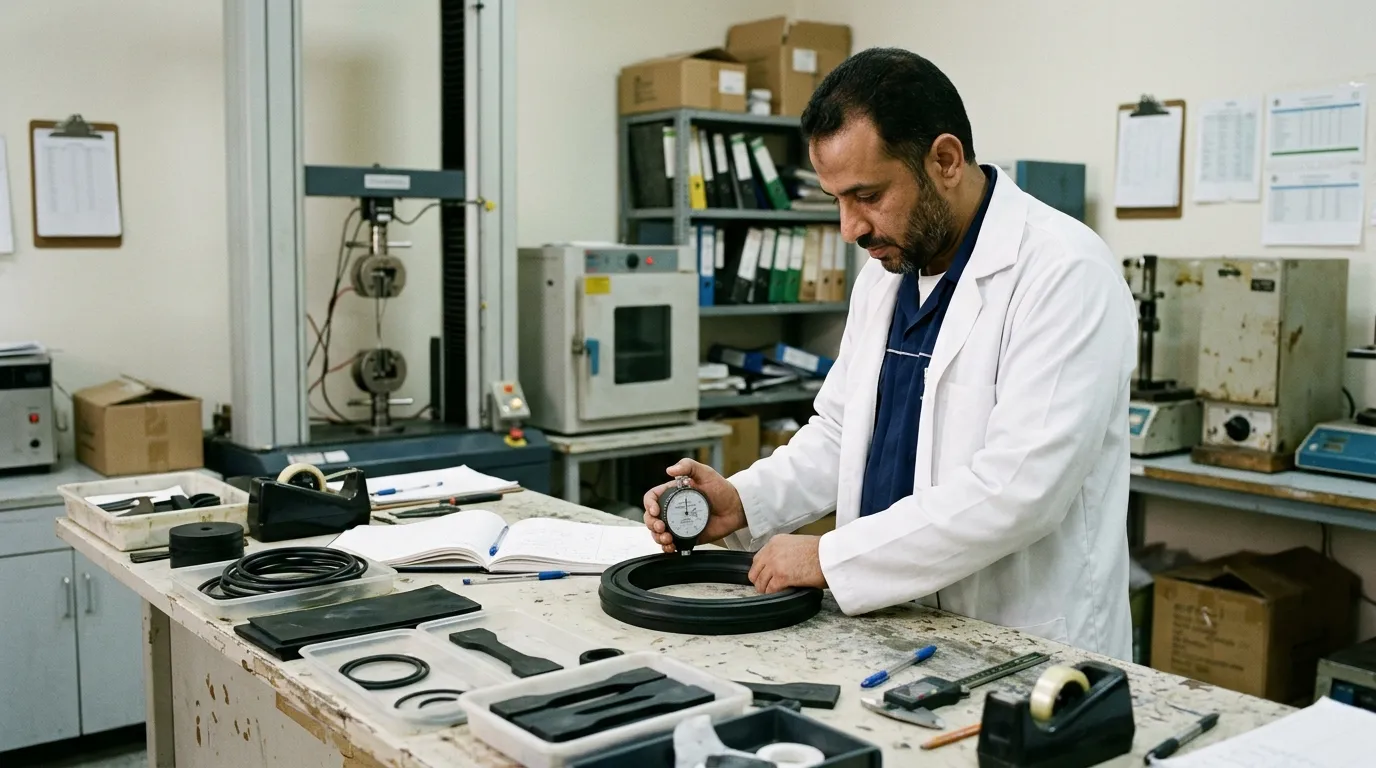
Hardness is the first number on most rubber drawings. It is quick to measure and tells you a lot about how a seal will behave, if you read it the right way.
What hardness measures
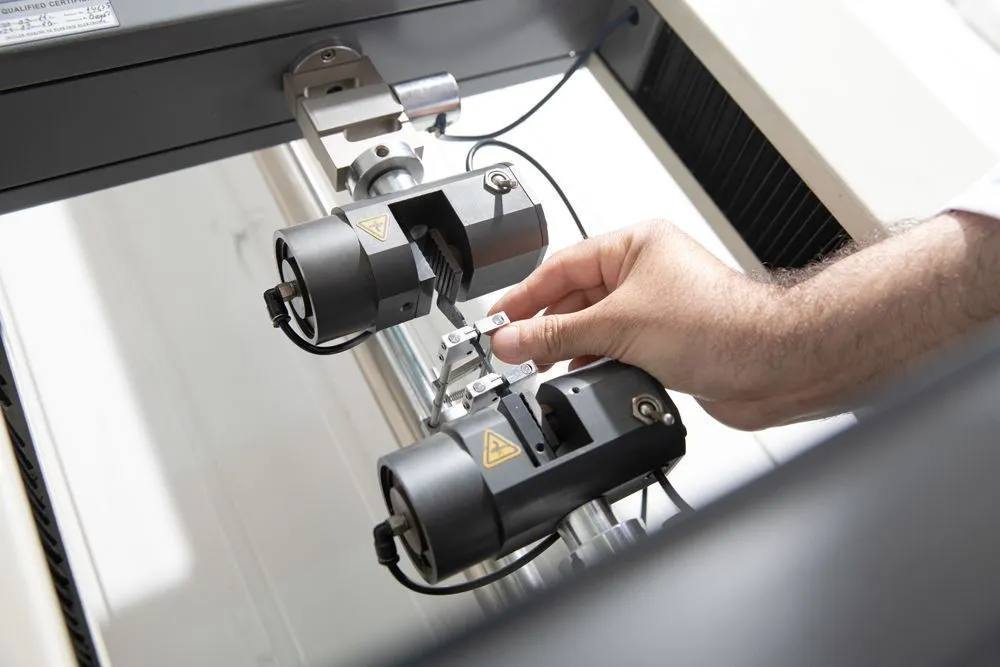
Rubber hardness is the resistance of the surface to an indenter pressed into it under a set force. A higher number means a firmer rubber. It is not a measure of strength: two compounds with the same hardness can have very different tensile strength or ageing.
Shore A and IRHD
- Shore A: measured with a spring-loaded durometer (ASTM D2240, ISO 7619-1). Common for most seals and moulded parts.
- Shore D: for very hard rubbers and plastics.
- IRHD: International Rubber Hardness Degrees (ISO 48), measured with a dead load; often used for pipe seals and thin or small parts.
Shore A and IRHD values are close in the middle of the range but are not identical, so always state which scale a drawing uses.
Why there is a tolerance
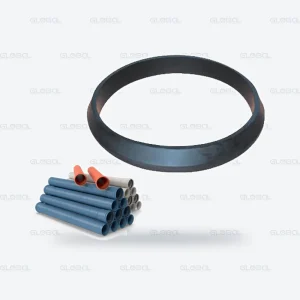
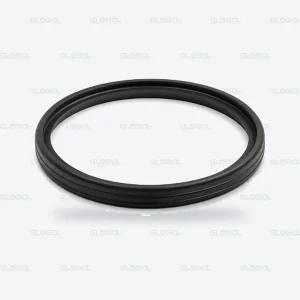
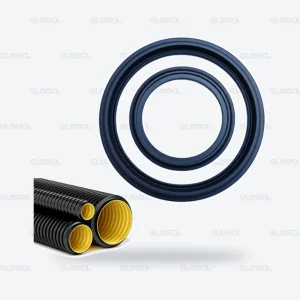
Hardness is normally given with a tolerance, for example 60 ± 5. Mixing, curing and the measuring itself all vary a little. Our TRIO-SEAL™ rings, for example, are specified at 60 ± 5 Shore A.
How hardness affects a seal
- Softer rubber seals rough or uneven surfaces at lower force.
- Harder rubber resists extrusion into gaps under pressure and wears less.
- Too soft can roll out of a groove; too hard can need high assembly force.
This article is general guidance. Always follow your project specification and the manufacturer’s instructions.