







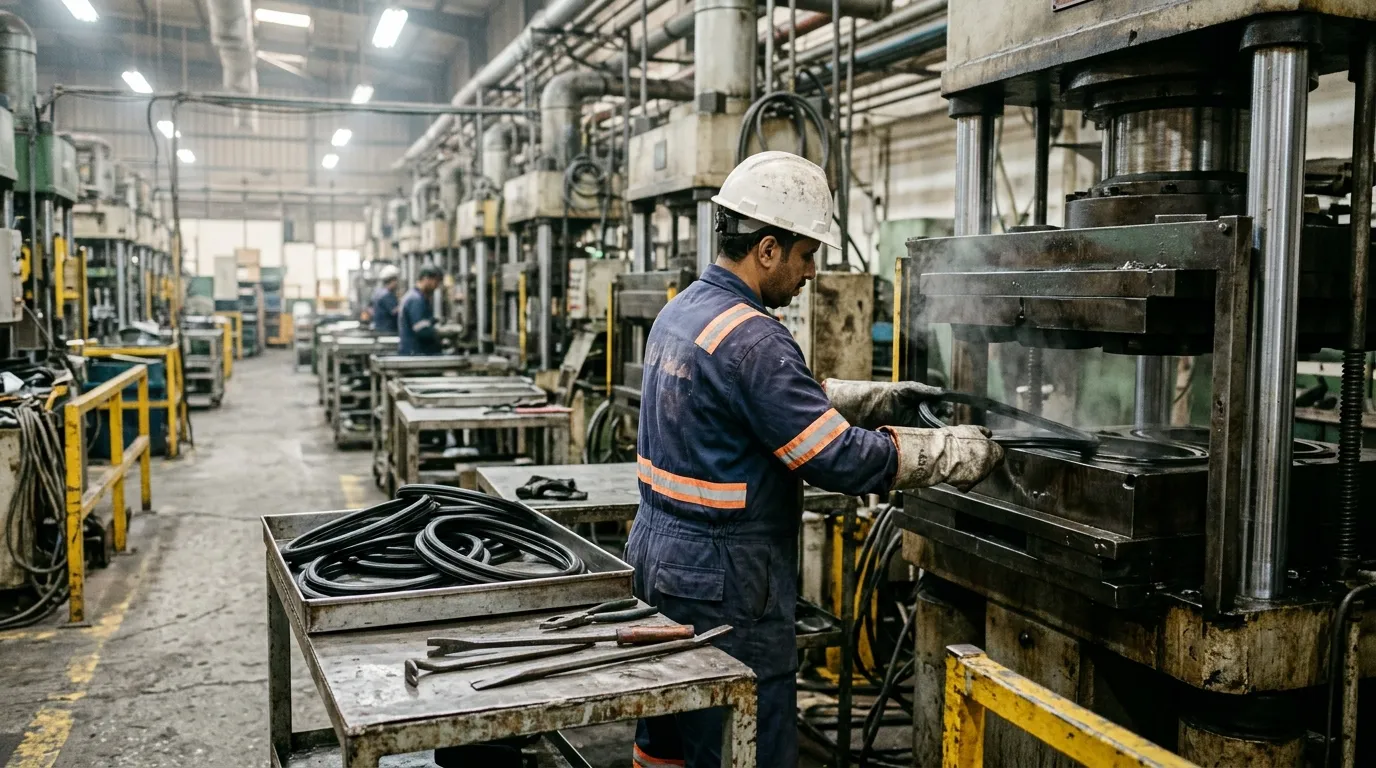









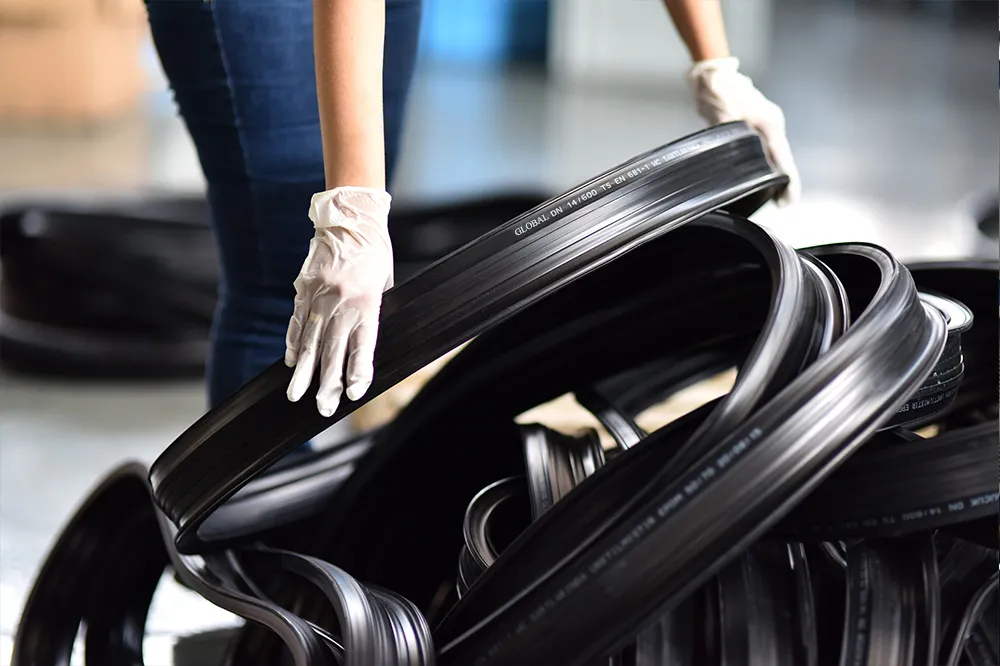
Rubber can age on the shelf before it is ever fitted. ISO 2230 gives guidelines for storing rubber products; the main points are simple and cost almost nothing.
What ages rubber in storage
- Heat: speeds up every ageing reaction.
- Light, especially direct sunlight and UV.
- Ozone: from electric motors, welding and some lamps.
- Oils, solvents and fuels nearby.
- Deformation: parts left stretched, folded or compressed.
Storage rules
- Cool, dry and dark; out of direct sunlight.
- Away from motors, welding and other ozone sources.
- In closed packing, away from oils, solvents and chemicals.
- Flat and free of tension: do not hang rings on hooks or stack heavy loads on them.
- First in, first out: use the oldest stock first.
On site
Site storage is the weak point. Keep rings and seals in their packing, in the shade, and take out only what you fit that day. A ring left in the sun on a hot day can pick up surface cracks before it reaches the trench.
Before fitting
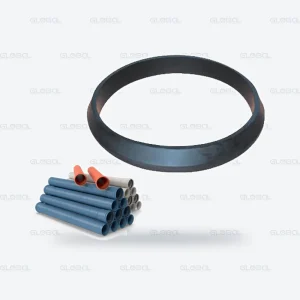
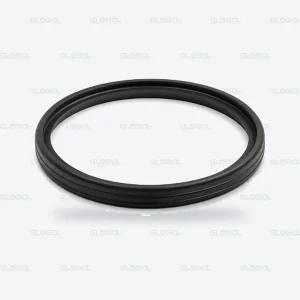
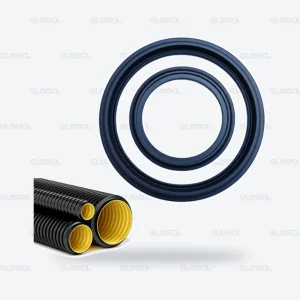
Check each part: no cracks, no surface tackiness, no permanent deformation. If in doubt, set it aside and ask the supplier. Our rubber rings are packed to protect them in transport and storage.
This article is general guidance. Always follow your project specification and the manufacturer’s instructions.