

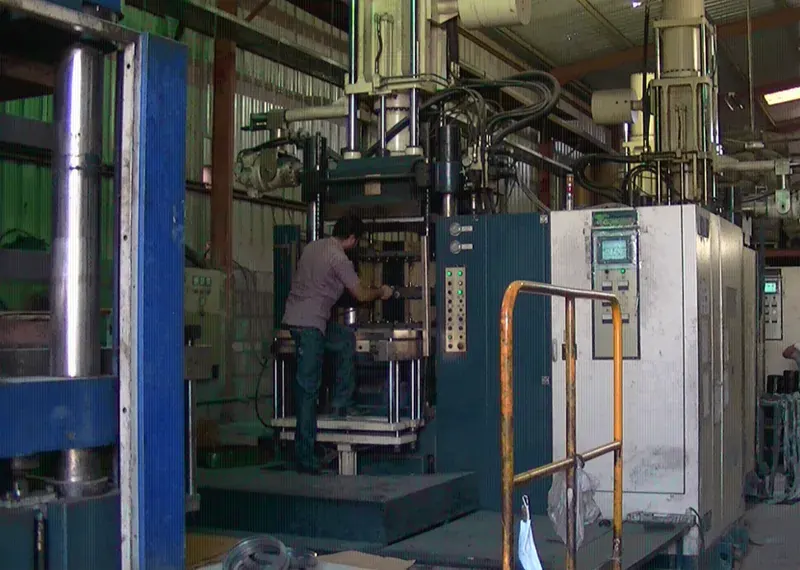
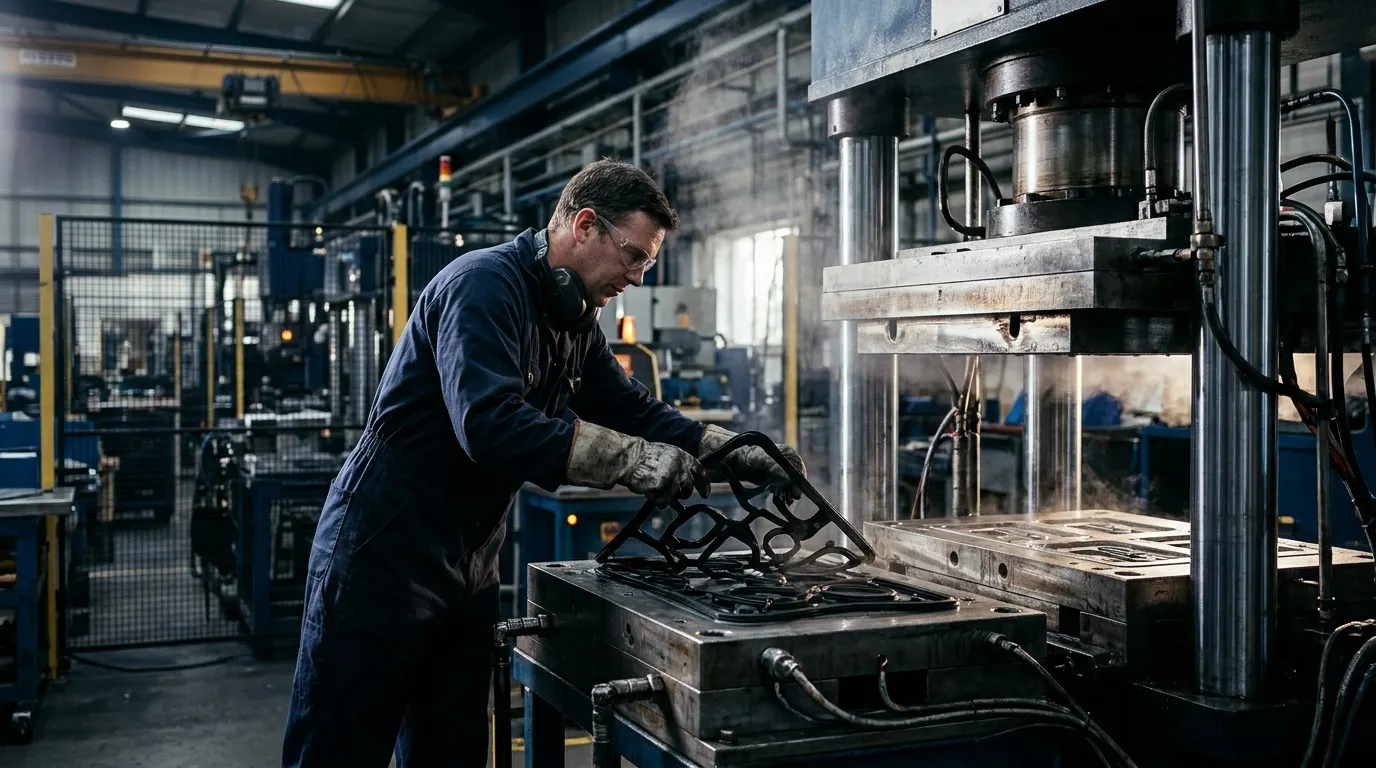
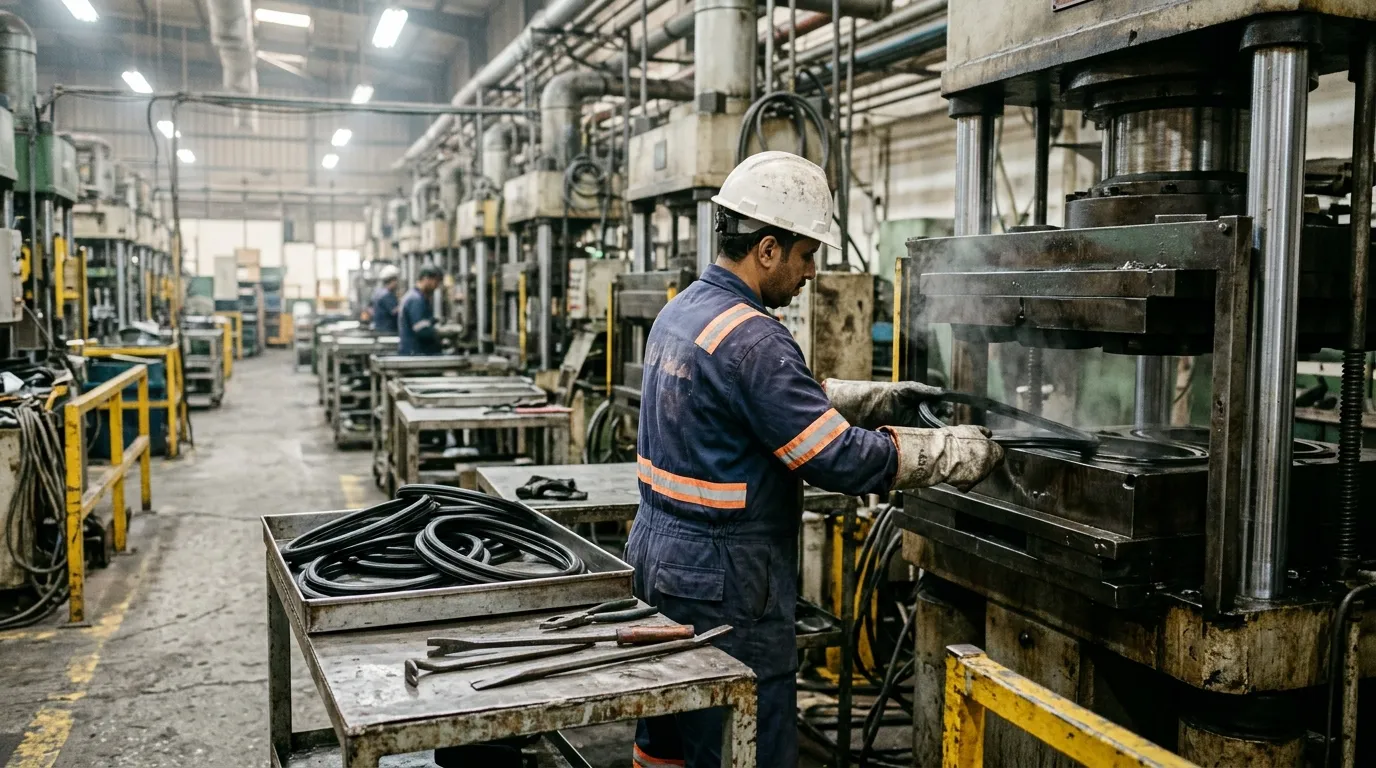








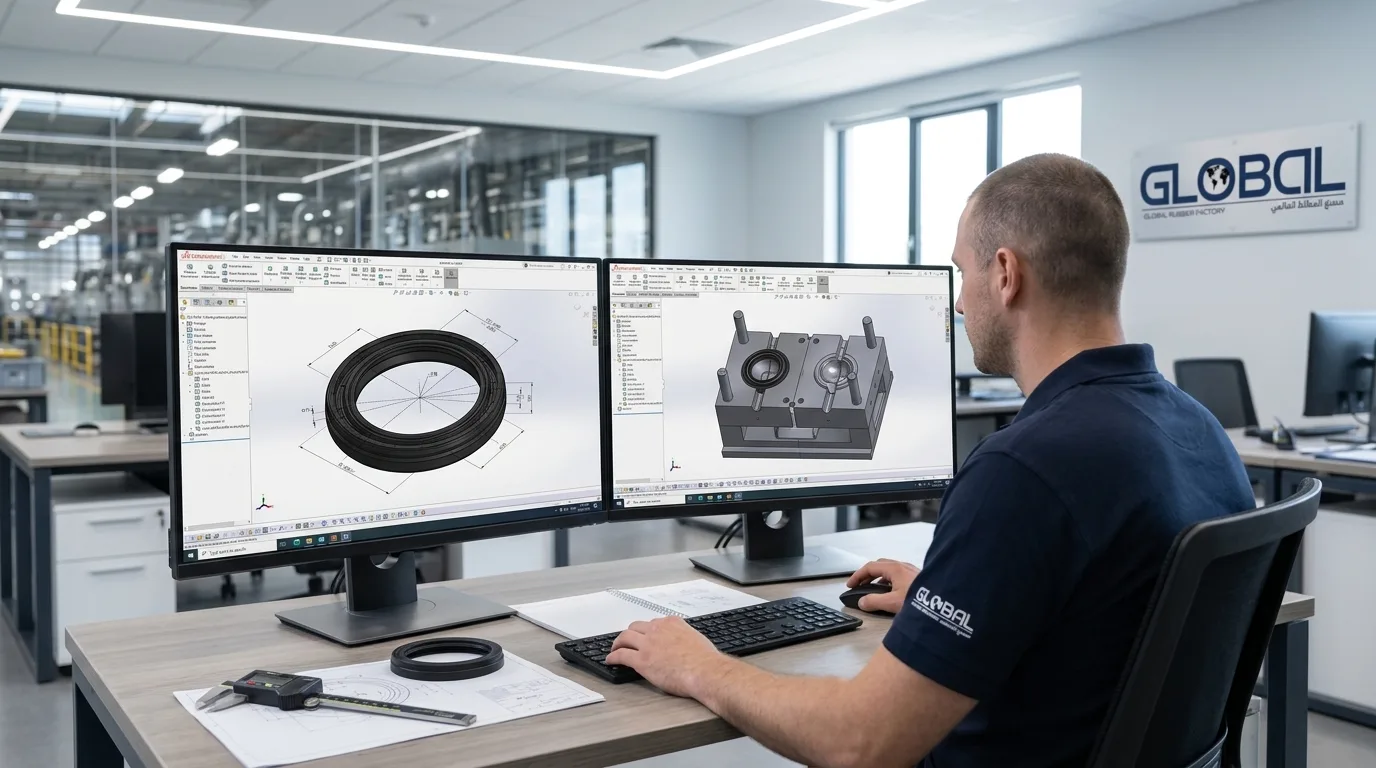
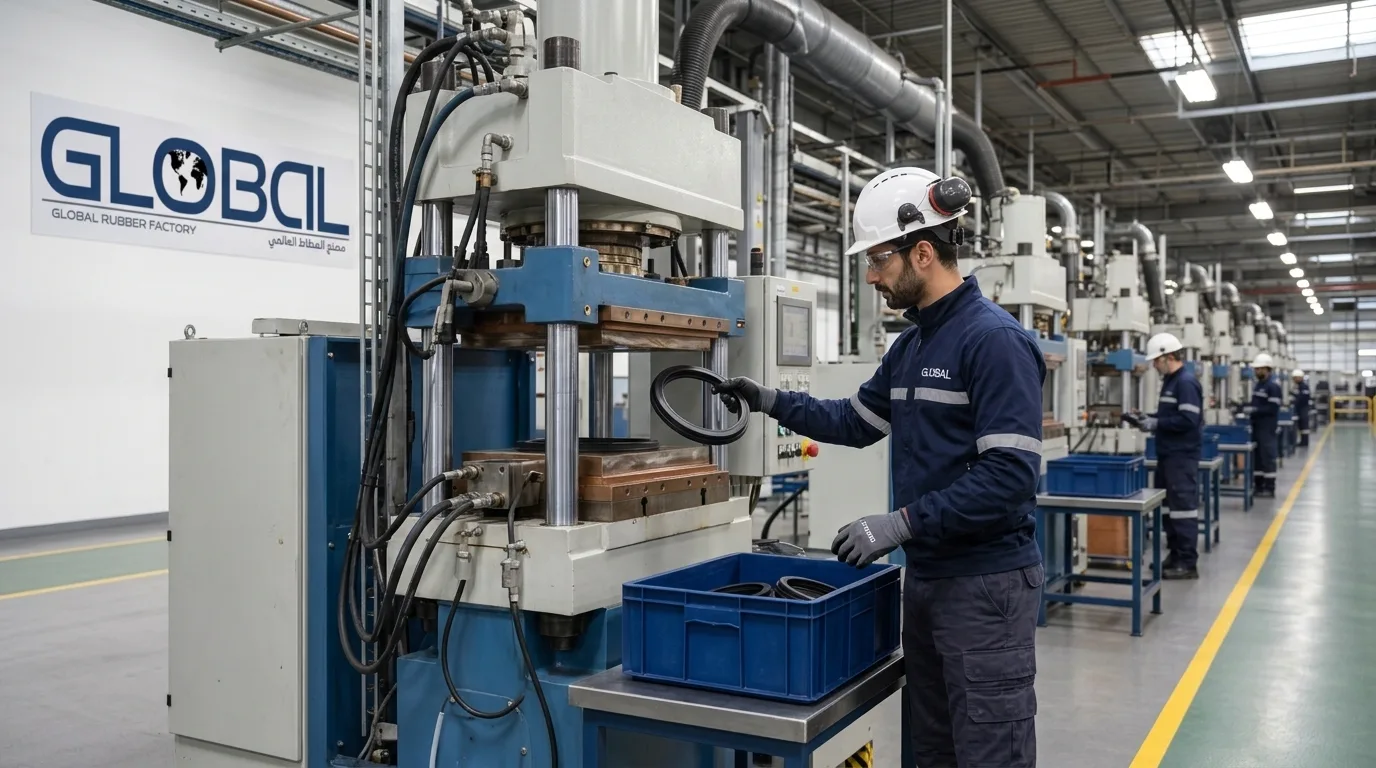
Most rubber parts are moulded: the compound is shaped and vulcanised in a heated steel mould. The way the rubber gets into the mould changes cost, tooling and quality.
Compression moulding
A pre-weighed blank of compound is placed in the open cavity and the press closes. It is simple, the moulds are lower in cost, and it suits large parts, thick sections and small to medium quantities. Flash at the parting line is trimmed after moulding.
Transfer moulding
The compound is placed in a pot above the cavity and forced through small channels into the closed mould. It gives better control of detail and of metal inserts, so it is common for rubber-to-metal parts and precise shapes.
Injection moulding
The compound is heated in a barrel and injected into the closed mould. Cycle times are short and parts are very consistent, which suits high quantities of small and medium parts. Moulds and machines cost more, so volume must justify them.
How to choose
| Method | Best for | Tooling cost | Typical quantity |
|---|---|---|---|
| Compression | Large, thick or simple parts | Lower | Low to medium |
| Transfer | Detailed parts, inserts, bonded parts | Medium | Medium |
| Injection | Small precise parts in volume | Higher | High |
Send us a drawing or a sample and the yearly quantity; we will propose the method and the mould. See our capabilities for what we make in-house.
This article is general guidance. Always follow your project specification and the manufacturer’s instructions.