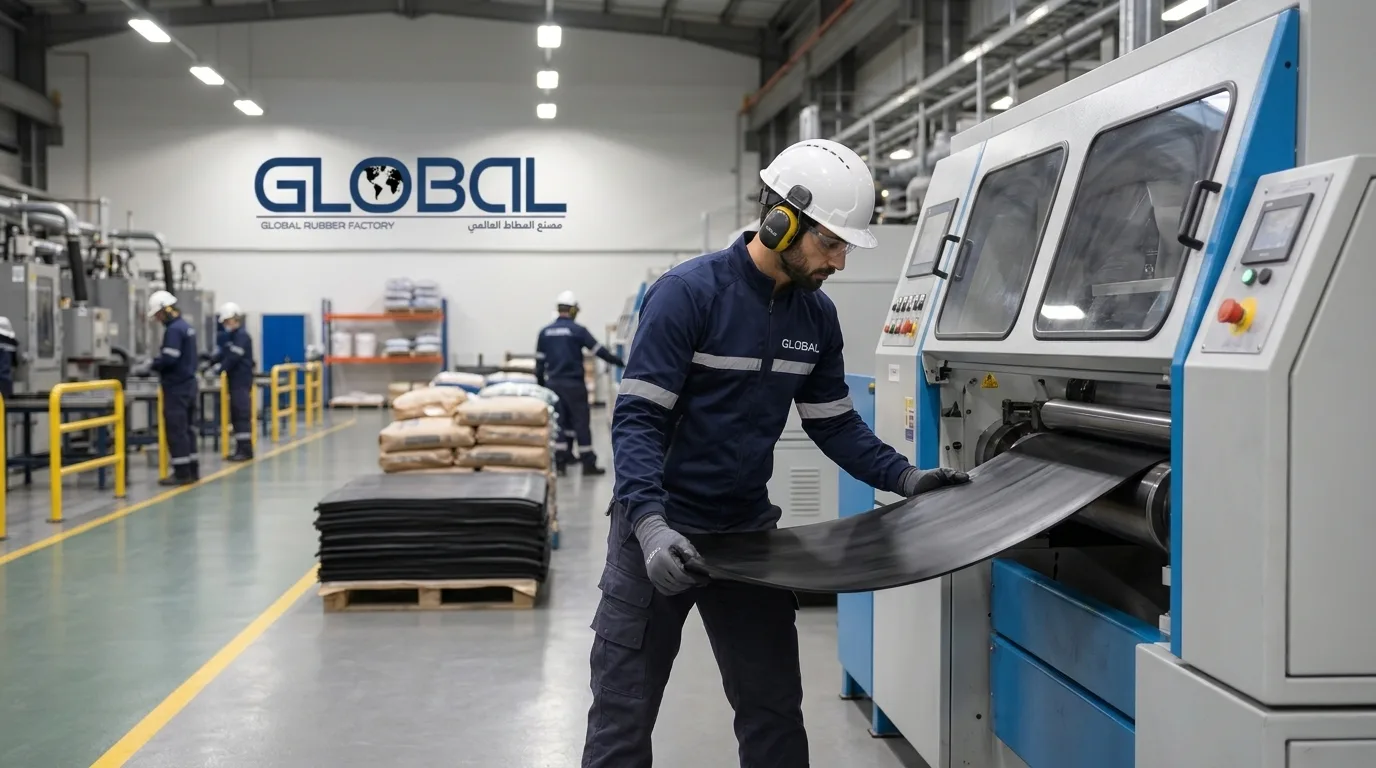


Raw rubber is soft and sticky. It becomes a useful engineering material only after it is compounded with other ingredients and vulcanised.
What goes into a compound
| Ingredient | What it does |
|---|---|
| Polymer (e.g. EPDM, NBR, NR) | Sets the base properties: chemical, temperature and weather resistance |
| Fillers (carbon black, silica, clays) | Strength, hardness, abrasion resistance, cost |
| Plasticisers / oils | Processing and low-temperature flexibility |
| Protective agents | Resistance to heat, ozone and ageing |
| Cure system (sulphur or peroxide, with accelerators) | Forms the cross-links during vulcanisation |
Mixing
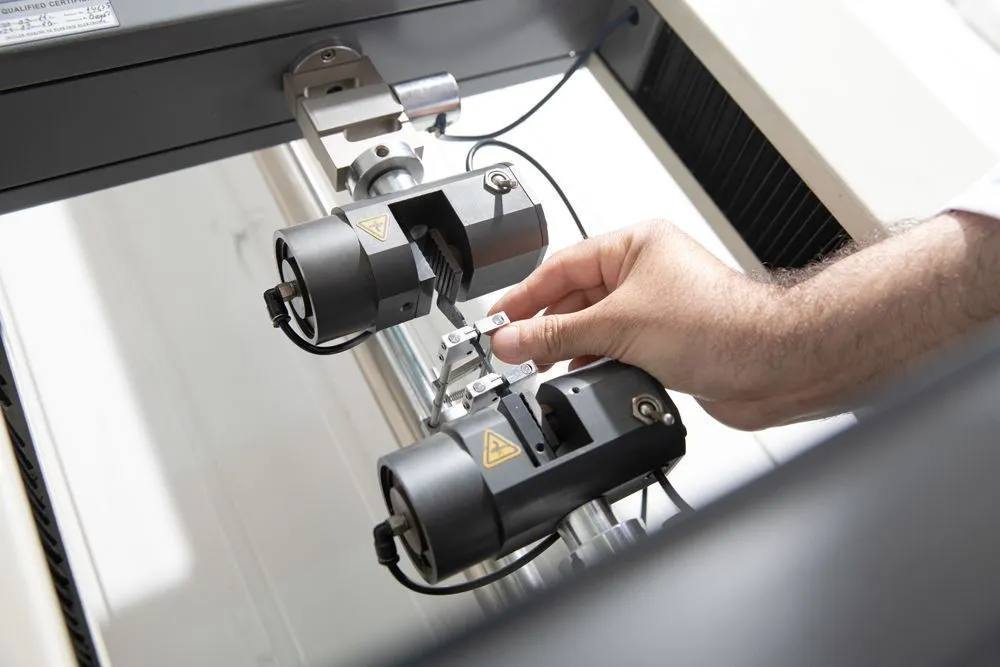
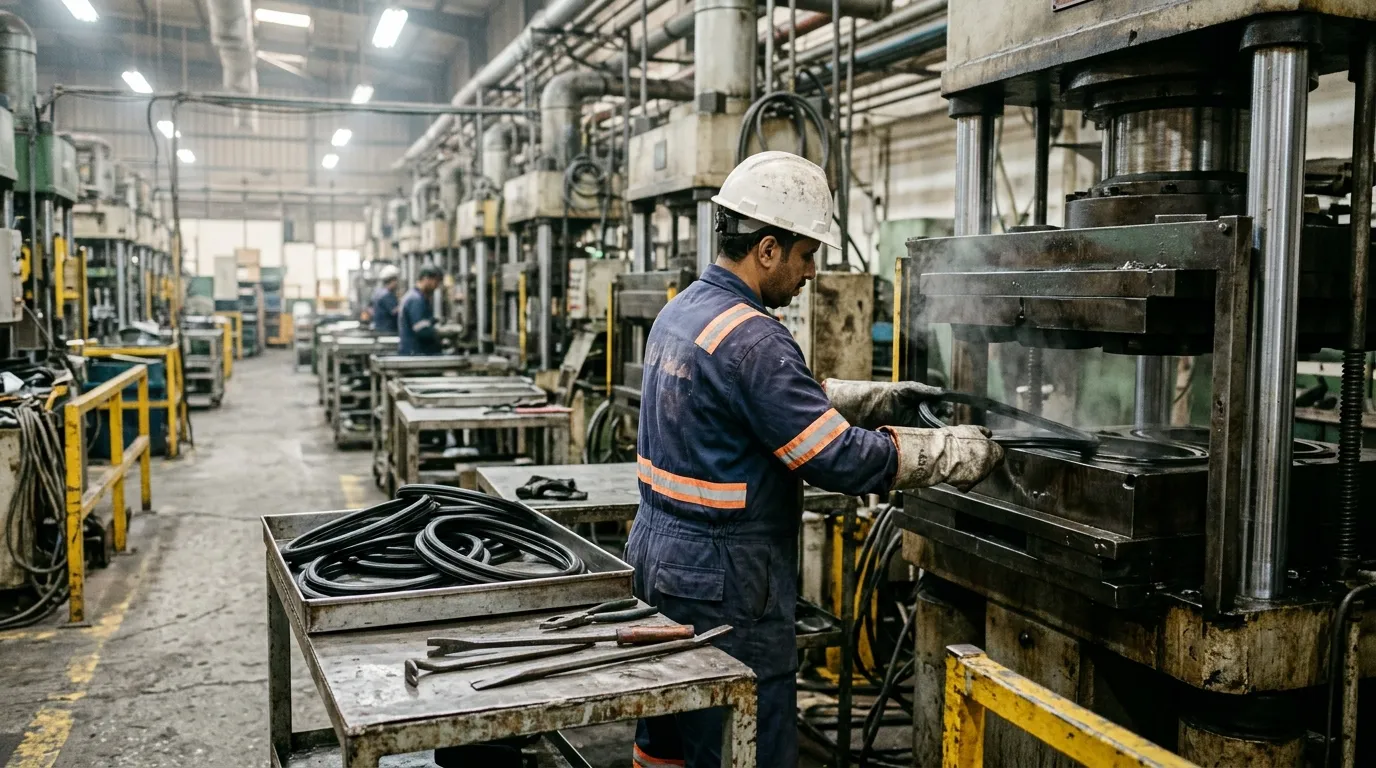
The ingredients are mixed in an internal mixer and then on a two-roll mill, in a controlled order and temperature so the cure system does not start too early. Each batch is checked before it moves on, typically for hardness and cure behaviour, so every part made from it behaves the same.
Vulcanisation
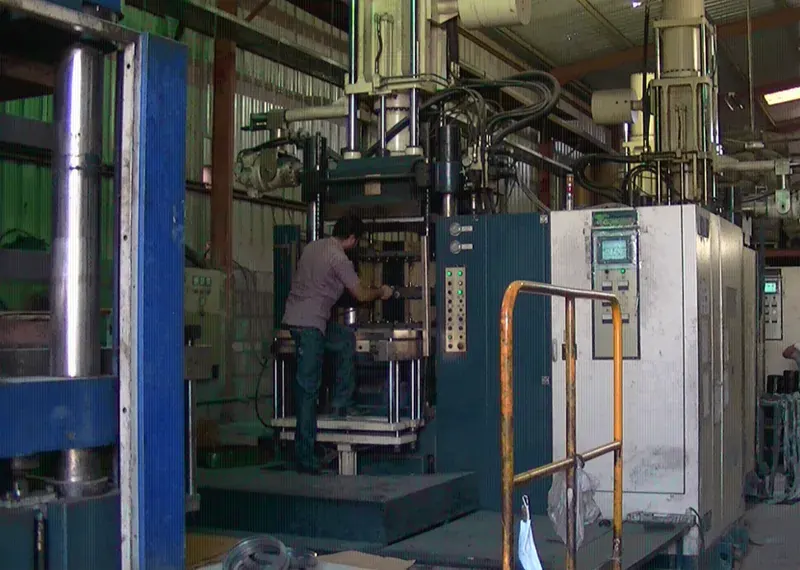
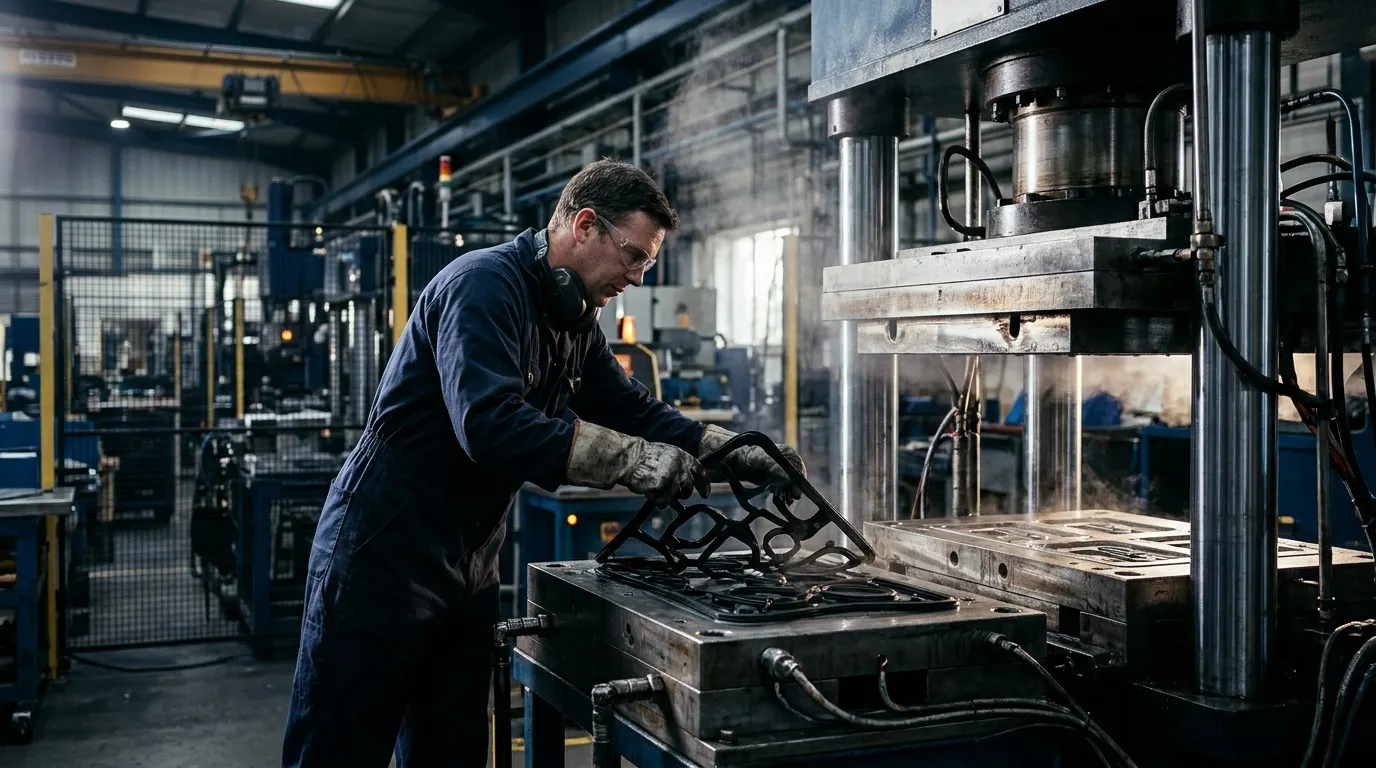
Vulcanisation is the chemical reaction, driven by heat and time, that links the long polymer chains to each other. Before it, rubber flows like a very thick liquid; after it, the part returns to its shape when the load is removed. Temperature, time and pressure in the mould are set for each compound and part thickness.
Why the recipe matters to you
Two parts with the same polymer name can differ in hardness, compression set, ageing and chemical resistance because their recipes differ. When you order a seal or a custom rubber part, give the real service conditions so the compound is chosen for the duty, not just the name.
This article is general guidance. Always follow your project specification and the manufacturer’s instructions.